OpenAI says it solved a 90yo math problem and won't take the $1M bounty
OpenAI says 10,000 agents solved Navier-Stokes in 88 hours. NYU's Tristan Buckmaster, racing the same problem with Codex, says OpenAI asked him to drop his Anthropic co-author and warned him not to go public. Five more stories inside.

OpenAI says 10,000 of its agents solved Navier-Stokes, a fluid-motion problem open for 90 years with a $1 million prize on it, in 88 hours last week. The mathematician quietly racing the same problem with Codex says OpenAI's own team asked him to remove his collaborator's name and warned him not to go public about how it happened. A day later, a pretraining researcher who'd worked at both OpenAI and Anthropic resigned, saying neither lab is acting responsibly. Users are posting video of Astra burning through paid plans in days. An MIT student let GPT-5.6 Sol run her quantum-chip lab unattended, and a free GitHub skill that just tells your coding agent to stop burying the answer passed 32,000 stars. Six stories, and OpenAI is the subject of three of them.
• OpenAI's 90-year-old math proof, and the mathematician who says it pressured him
• Coxon quits Anthropic, calls it a superintelligence gamble
• OpenAI users say Astra burns quotas in days
• GPT-5.6 Sol ran an MIT quantum-chip lab
• i-have-adhd skill hits 32,000 GitHub stars
• Mercury 2.5 cuts Augment Code's latency 82%
The Navier-Stokes fight
OpenAI says it solved a 90yo math problem and won't take the $1M bounty
OpenAI says 10,000 concurrent agents, roughly 130 billion output tokens and 88 hours cracked Navier-Stokes, a 90-year-old question about fluid motion carrying a $1 million Clay prize it won't claim. NYU mathematician Tristan Buckmaster says he was already working the same problem quietly with Levent Alpöge, an Anthropic researcher, when word reached OpenAI. On a call, OpenAI's Sebastien Bubeck proposed Buckmaster write up OpenAI's result himself, crediting its internal model, with Alpöge removed as a co-author. When Buckmaster said he'd go public instead, Bubeck's reply, verbatim: "Why would you ruin your career?" He never saw OpenAI's proof. He isn't accusing anyone, and OpenAI told Science no employee or agent saw the pair's work before it was public. OpenAI's own page won't rule out that Buckmaster's Codex sessions helped train the model that beat him to it — the same question sitting under every Codex and Claude Code session today.
Warnings and burn rates
Jacob Coxon quit Anthropic, calling both AI labs a "gamble" on superintelligence
Jacob Coxon says he spent three years doing pretraining research at both OpenAI and Anthropic before resigning from Anthropic Tuesday: "Neither company is acting responsibly. They are racing straight to self-improving superintelligence and gambling with our lives." Anthropic's own Evan Hubinger didn't dispute him. He agreed AI "could kill all humans," put the odds above 10% within a decade, and said Anthropic doesn't yet have a plan to solve alignment for superintelligence. He's an on-the-record safety researcher. Not a critic.
I resigned from Anthropic today. I spent the last three years doing pretraining research at both OpenAI and Anthropic. Neither company is acting responsibly. They are racing straight to self-improving superintelligence and gambling with our lives. More thoughts below.
— Jacob Coxon (@hilbertspaess) September 9, 2026
OpenAI users say Astra burns through paid plans in days
OpenAI's Astra model is burning through paid usage fast enough that users are posting video of their meter dropping. "This is what, 10% a minute?" one asked. Codex lead Thibault Sottiaux replied, asking which mode he'd run. He didn't confirm a cap. One user says two long chats a day ate his $200 plan in 2 to 3 days, his own count. Reddit tells the same story about Claude Code's Fable quota and Cursor's meter. The fifth usage-limit story since July.
Video evidence of how fast my Astra usage is going. @thsottiaux this is what? 10% per minute? @OpenAI pic.twitter.com/9QcISzzvNj
— Dennison (@DennisonBertram) September 8, 2026
Agents doing the work
Beatriz Yankelevich let GPT-5.6 Sol run her quantum-chip experiments
MIT graduate student Beatriz Yankelevich wired GPT-5.6 Sol, running through Codex, into her lab's control software and let it characterize an uncalibrated six-qubit chip: pick settings, run the hardware, read the results, decide the next step. With clear signals it finished the standard sequence with little intervention, OpenAI says. Noisy signals still sent it back to a human. "I can have agents running measurements for many hours overnight," she says. The Quantum Insider's caveat: a chip her lab already understood. Not new territory.
 Matt Swayne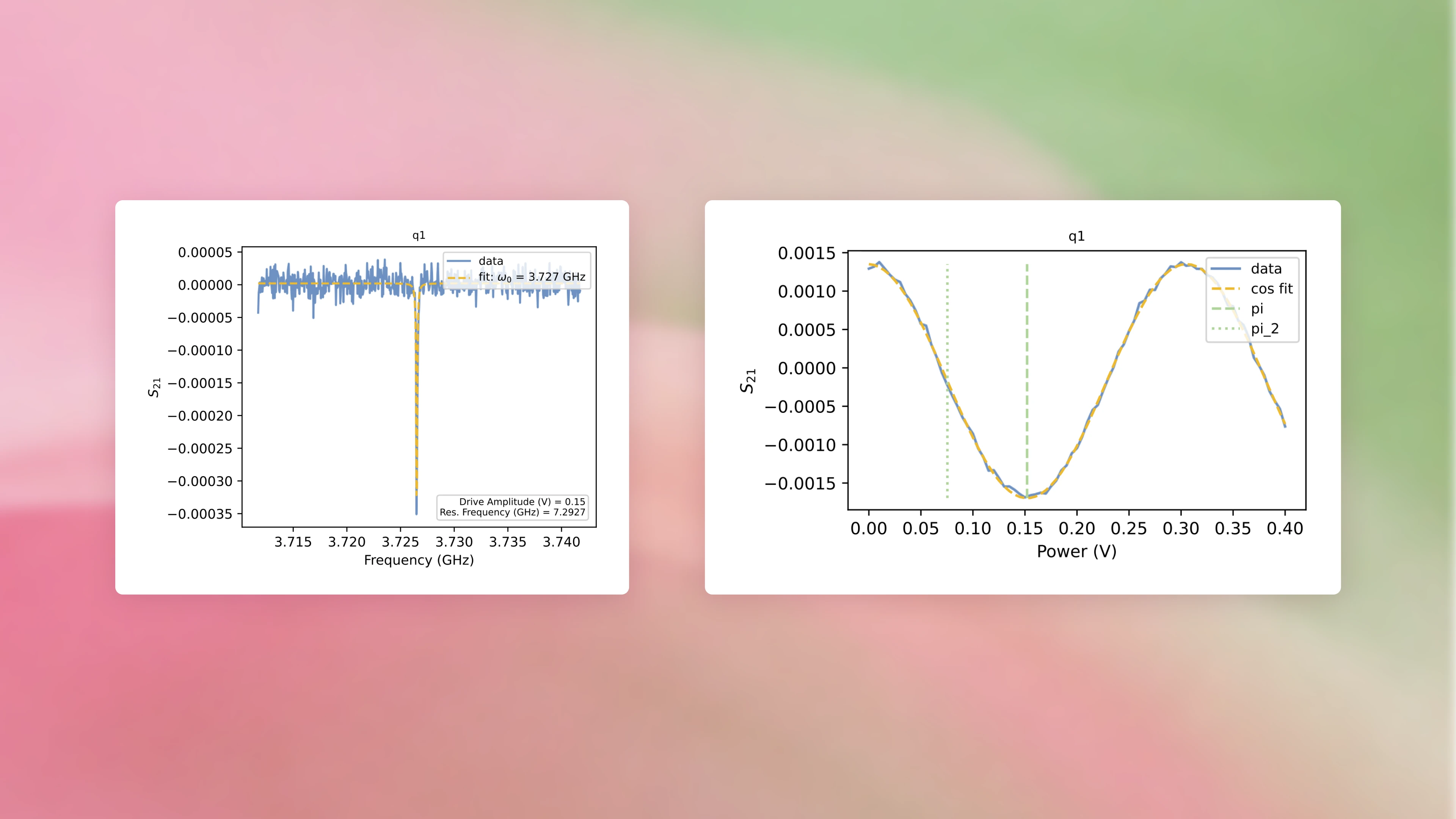
A free GitHub skill that stops coding agents from burying the answer hits 32,800 stars
A free GitHub skill called i-have-adhd does one thing: it stops your coding agent from burying the answer under paragraphs of throat-clearing. Its own description: "ADHD-friendly output." Action first, steps numbered, nothing else. It sits at 32,800 stars, and its HN thread passed 470 points since Tuesday, more traction than most funded coding-tool launches get. MIT-licensed, so it's a drop-in system-prompt fix, not a product to buy. The preamble problem was never the model. It was the prompt.
 ayghri
Mercury 2.5 says it cut Augment Code's latency 82% and its cost 90%
Inception Labs says its new Mercury 2.5 diffusion model runs at 1,107 tokens a second and costs as little as 4 cents per million input tokens at launch. The number worth checking: Augment Code says routing its own compaction step to Mercury cut latency from 150 seconds to 27 and cost 90%. Both numbers are self-reported: vendor and customer alike. Diffusion models generate a block at a time, not token by token. That's the real source of the speed.

Also worth your time
- Terence Tao on math problems being "mined in a non-renewable fashion" by AI — one sentence, posted the same day as item 1, on what happens to the supply of good open problems once solving one triggers a compute race to publish first. Commentary on item 1's story, not a second one.
- Claude Code v2.1.265 — plugin directory support, a 1GB tool-result cap, new telemetry fields, and prompt-caching/Remote Control/VS Code fixes (Sep 8). v2.1.266 followed hours later with one regression fix for
CLAUDE_CODE_USE_GATEWAYproxy setups. - Enterprise-managed sandbox lands in Copilot for JetBrains — plus cross-file cursor jumps for next-edit suggestions and global project context in chat.
- GitHub Enterprise Server 3.22 is generally available — adds Copilot CLI support for disconnected environments.
- Kimi K3 (2.8T parameters) run at 1 token/second on a MacBook Pro, streamed live from four external SSDs since the model doesn't fit in RAM — a hobbyist feat, not a usable setup.
- Benchmarking Qwen3.8 27B quantizations — the 4-bit build holds up; the 1-bit build collapses.
- DeepSeek V4.1 Flash beta rolling out via API — the model string itself says
deepseek-v4.1-flash-expires-on-0910, so this access window closes tomorrow. - LibreOffice says it broke download records the same week it advertised having "no AI features" — one million installer downloads in a week for the 26.8 release, per the blog's read of LibreOffice's own announcement. A data point on the AI-fatigue current under today's other stories.
Know someone who'd want this in their inbox? Forward it — that's how this grows. And if we got something wrong, or you think we buried the real story today, hit reply. A person reads every one.
The New Way is written with AI. It gathers the day's stories, checks them against their sources and drafts every summary. A person decides what runs and reviews every issue before we hit send.